

-

Glacier National Park’s Wild Side
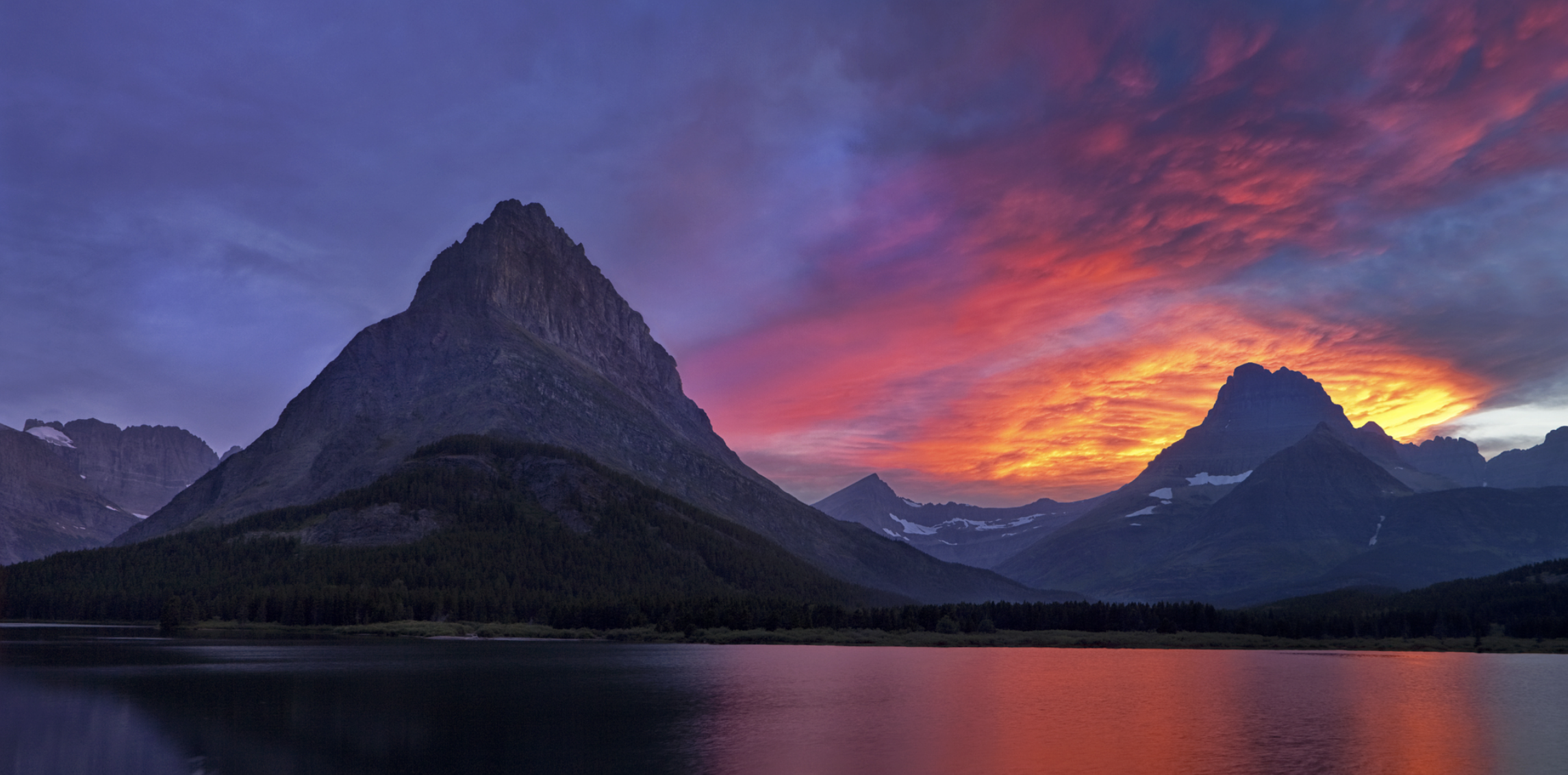
One of North America’s most spectacular ecosystems and a bucket-list destination.
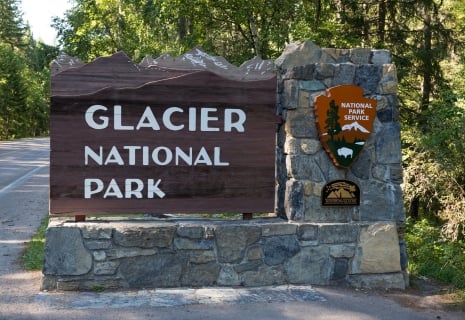
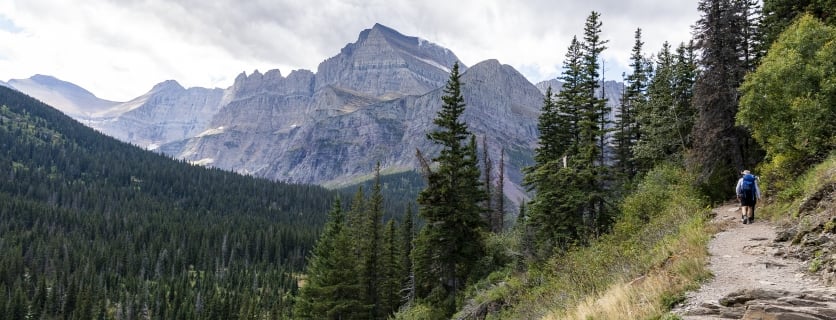
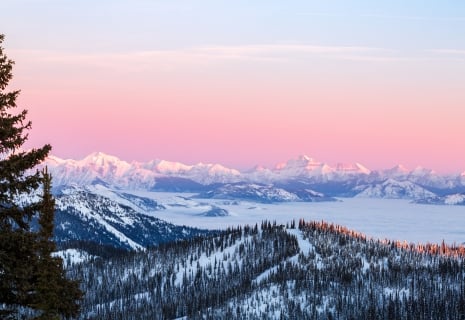
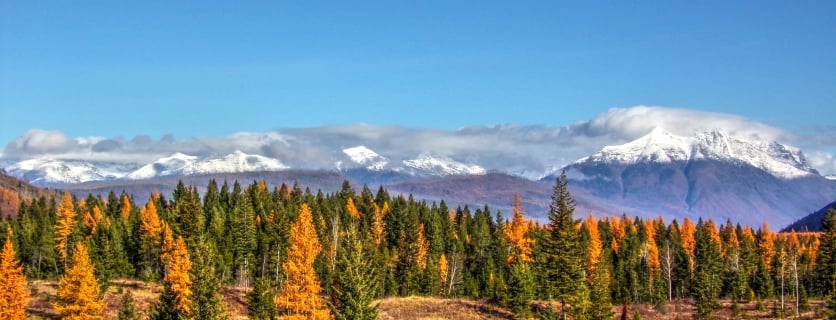
In the far northern reaches of Montana, where the jagged spine of North America rises into the sky, Glacier National Park stands as a landscape defined by scale and raw wilderness. Shaped by ice and time, it is one of the last truly untamed places on the continent.
More than 11,000 years ago, glaciers advanced and retreated, carving the valleys and peaks that make up the landscape today. This is where ecosystems from the Pacific coast, the Great Plains, and northern Canada meet, making it one of the most biologically diverse regions in North America.
It’s no surprise that Robin Williams, while filming What Dreams May Come, said of Glacier National Park: “If it isn’t God’s backyard, then he certainly lives nearby.”
The First People
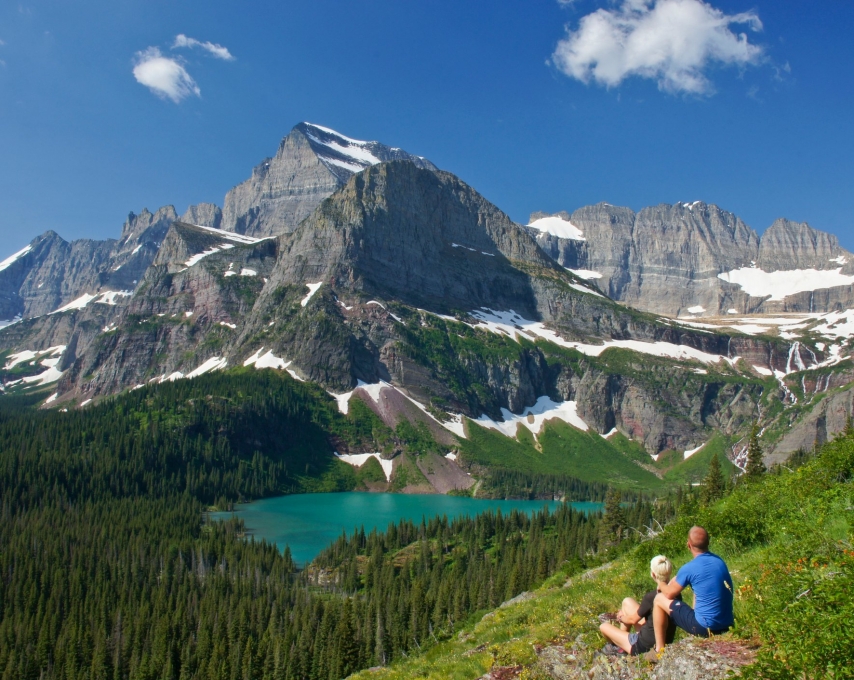
For more than 10,000 years, long before it became a national park, this land was home to Indigenous peoples. For the Blackfeet, Salish, Pend d’Oreille, and Kootenai, this is ancestral land, known as Ya·qawiswit̓xuki, meaning “the place where there is a lot of ice.”
When early European trappers and traders began arriving in the 1700s, the region became part of wider networks of exchange between Indigenous communities and newcomers.
Over time, treaties and federal policies reshaped patterns of land use and settlement across the region. This led to the creation of reservations that remain home to these tribal communities, where ties to the land continue across generations.

Early Explorers and Conservation
In 1885, George Bird Grinnell — a publisher and conservationist — was drawn to Glacier after publishing an article about the area written by explorer and writer James Willard Schultz.
Intrigued, he left New York and traveled west, where he met Schultz and joined him on a hunting trip to experience the region firsthand. His early visits left a lasting impression. Grinnell returned almost every year for nearly four decades. He later wrote:
“No words can describe the grandeur and majesty of these mountains, and even photographs seem hopelessly to dwarf and belittle the most impressive peaks. The fact that it is altogether unknown, the beauty of its scenery, and the opportunity it offers for mountain climbing, give the region a wonderful attraction for the lover of nature.”
Becoming A National Park
Grinnell became one of the most persistent early voices in the movement to preserve Glacier and establish it as a national park. His conservation work was later honored with the naming of Grinnell Glacier.
While not alone in that effort, he played a key role in shaping the movement that led to its designation.
In 1910, President Taft signed the bill establishing Glacier as the country’s 10th national park, transforming more than 1 million acres into a protected landscape for public access and enjoyment.
Building Access
With the arrival of the railway in the 1890s and increasing visitor numbers, the need for infrastructure quickly followed.
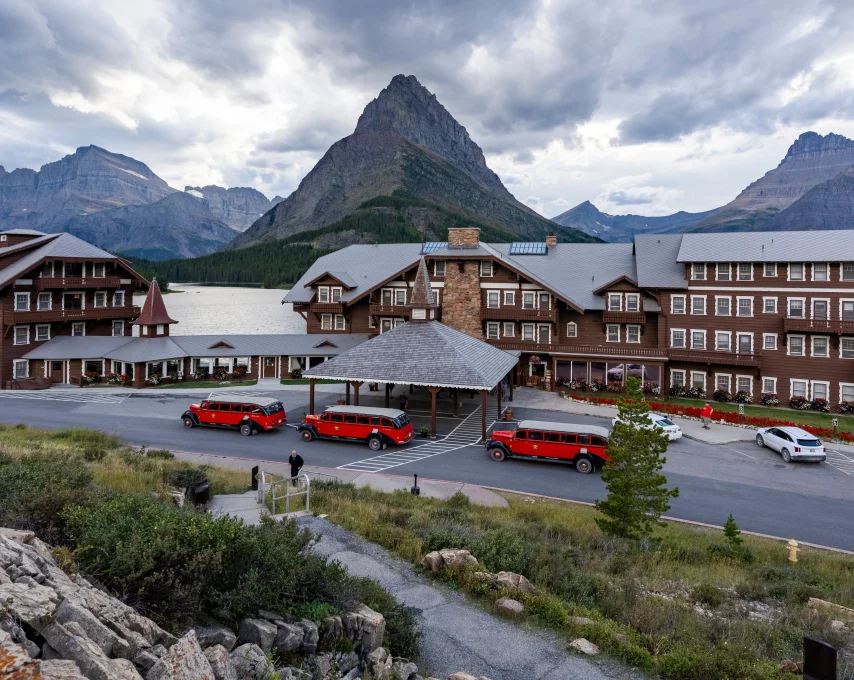
Louis W. Hill, son of Great Northern Railway founder James J. Hill, was instrumental in helping develop this infrastructure that included trails, roads, and the Many Glacier Hotel.
The Great Northern Railway supported this with a network of chalets and lodges, shaping how Glacier was first experienced — slowly, and over time.
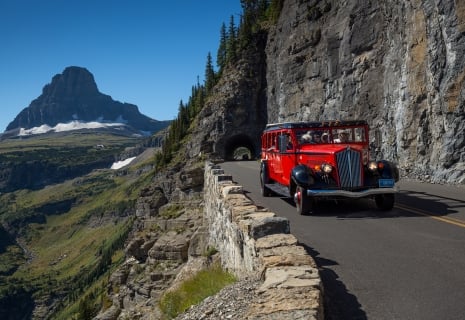
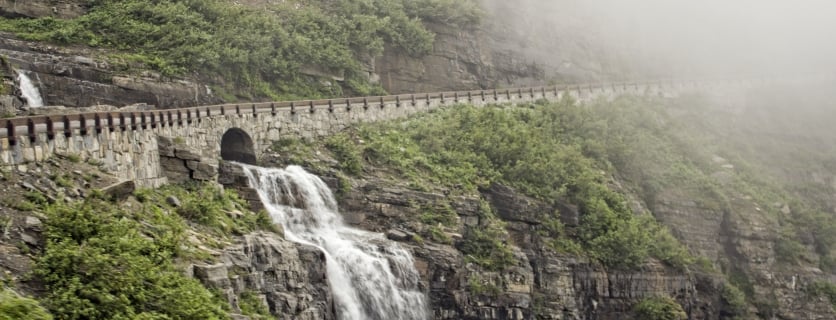
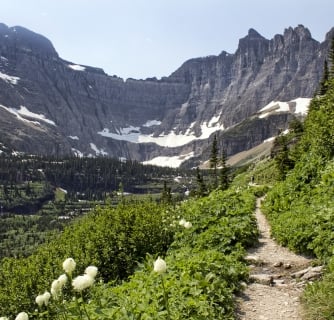
That changed, however, with the Going-to-the-Sun Road. Completed in 1933, it carved a passage across cliffs and over the Continental Divide, and is now considered a marvel of early 20th-century engineering.
Even today, visitors are in awe at how the park’s main route — a nearly 50-mile-long road — was built into such steep and unforgiving terrain.
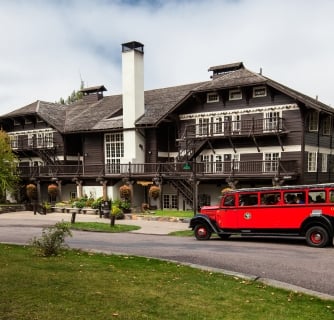
Historic Red Bus Tours still follow the same route, led by seasoned park guides called “Jammers,” a tradition dating back to the park’s early motor tours.
Water & Ice
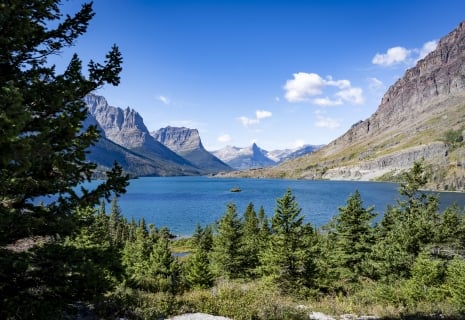
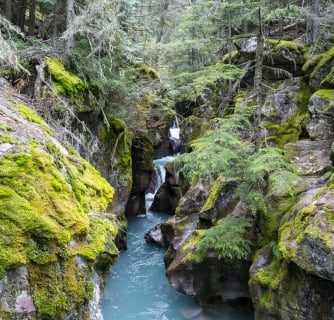
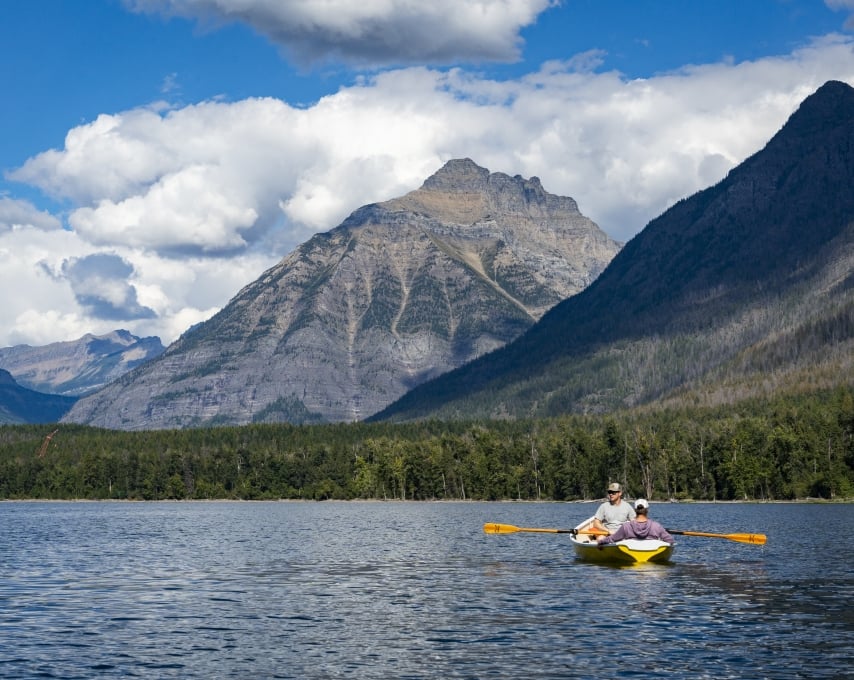
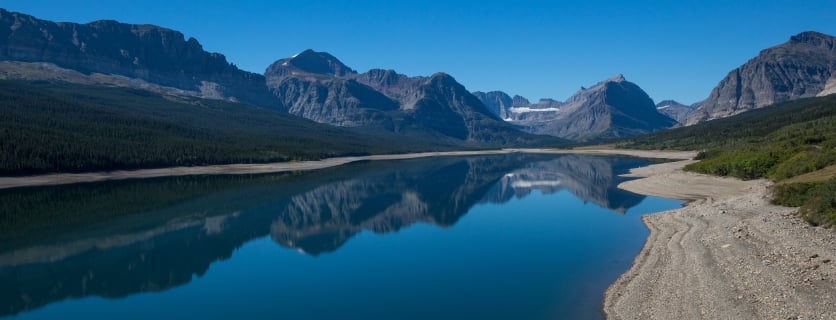
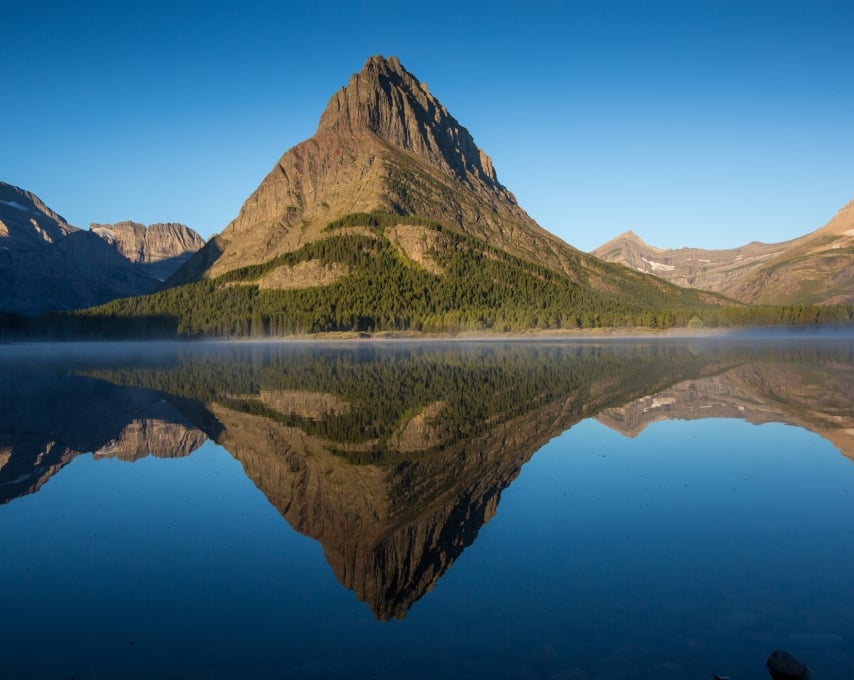
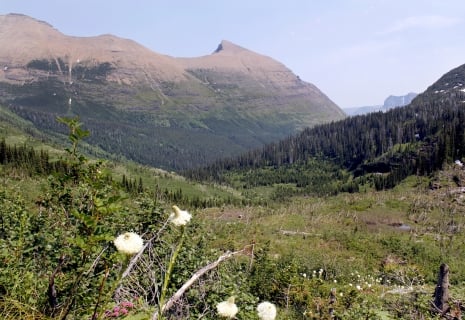
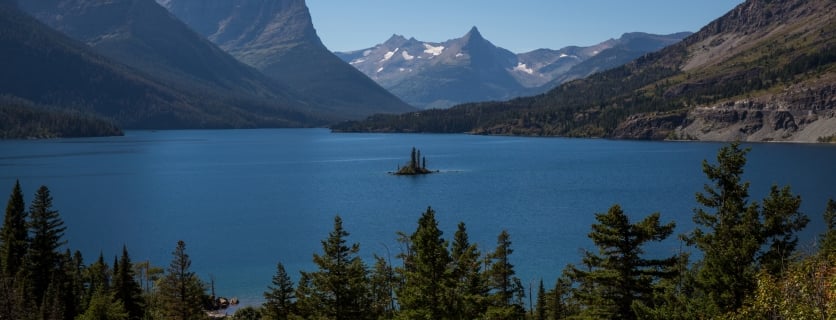
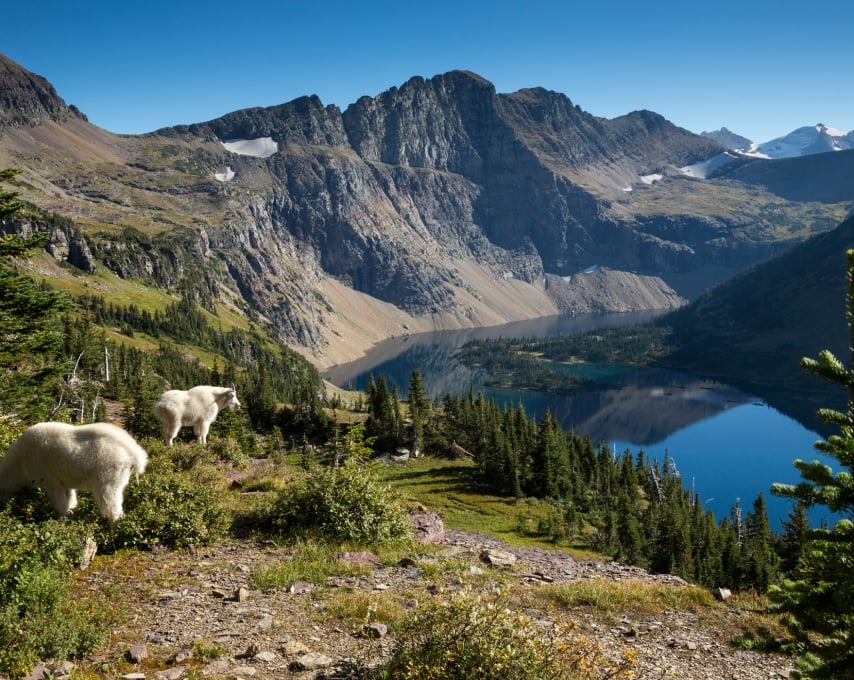
As its name suggests, water defines Glacier National Park. Fed by glacial runoff, the landscape holds more than 700 turquoise lakes, along with over 1,500 miles of streams and rivers.
It’s little wonder the National Park Service calls it the “headwaters of the entire continent.”
Here, three major river systems — the Missouri, Columbia, and Saskatchewan — begin their journeys. At Triple Divide Peak, a single drop of water can separate in three directions, eventually reaching the Pacific Ocean, the Atlantic Ocean, or Hudson Bay. It’s the only place in the country where this rare hydrological divide occurs.
The story of water in Glacier, of course, begins with the park’s glaciers. At the end of the Little Ice Age, around 1850, this region held an estimated 80 to 150 glaciers. Today, around 25 remain, smaller and retreating as the climate warms, but still shaping the valleys they carved.
Keeping It Wild
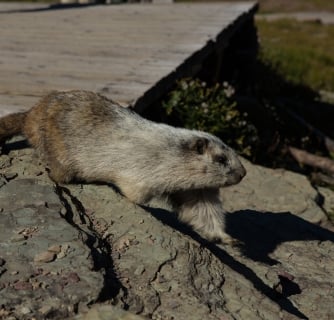
This very water is what sustains a diverse ecosystem across the park, supporting more than 70 species of mammals, nearly 300 species of birds, and over 1,100 vascular plant species — including a number of rare and threatened species.
Moose stand in streams to cool themselves, elk cross open meadows, and bighorn sheep follow rocky edges. Grizzly bears roam the valleys in one of the highest densities in the Lower 48. Near Logan Pass, mountain goats move easily along steep faces.
In the forests around St. Mary Lake and the Beaver River Valley, wolves and mountain lions pass largely unseen. Occasionally, a wolverine crosses a patch of snow or a Canada lynx slips into the trees. Beneath the surface, cutthroat and bull trout move through cold water.
Experiencing Glacier Today
Glacier National Park draws visitors for many reasons — the beautiful blend of park and architecture (known as parkiture), the conservation legacy, and the ability to be fully immersed in nature.
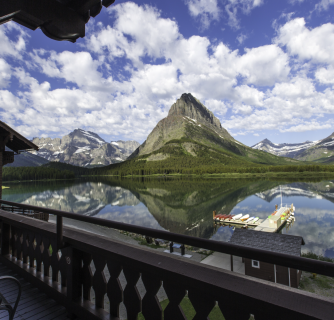
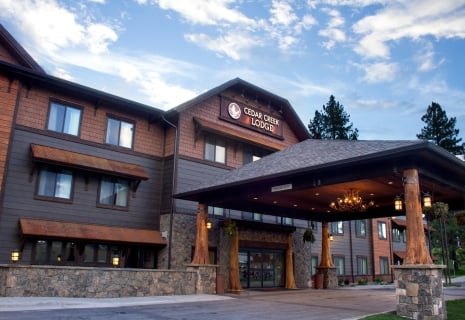
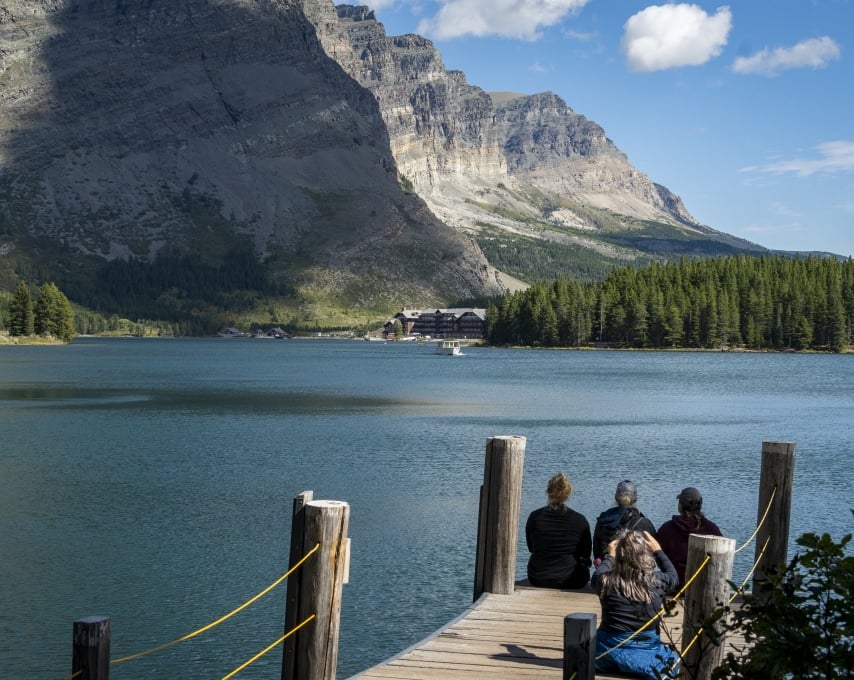
The historic lodges and cabins provide access to key areas, including Many Glacier Hotel on the east side overlooking Swiftcurrent Lake and the Swiss chalet-style Lake McDonald Lodge on the west. Just beyond the park boundary, Cedar Creek Lodge offers a more contemporary base.
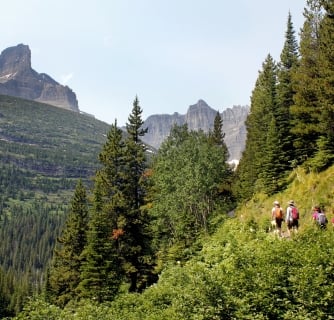
There really is no single way to move through Glacier National Park. The experience builds in both big and small moments: a shift in light across water, the sound of a distant cascade, the brief appearance of wildlife. A visit to the Crown of the Continent is a moment in a changing landscape where you realize you’ve become part of its history.
For more information about Glacier National Park, visit GlacierNationalParkLodges.com.