

-

Steam, Steel, and Six-Shooters:
The Revival of America’s Great Rail Journey
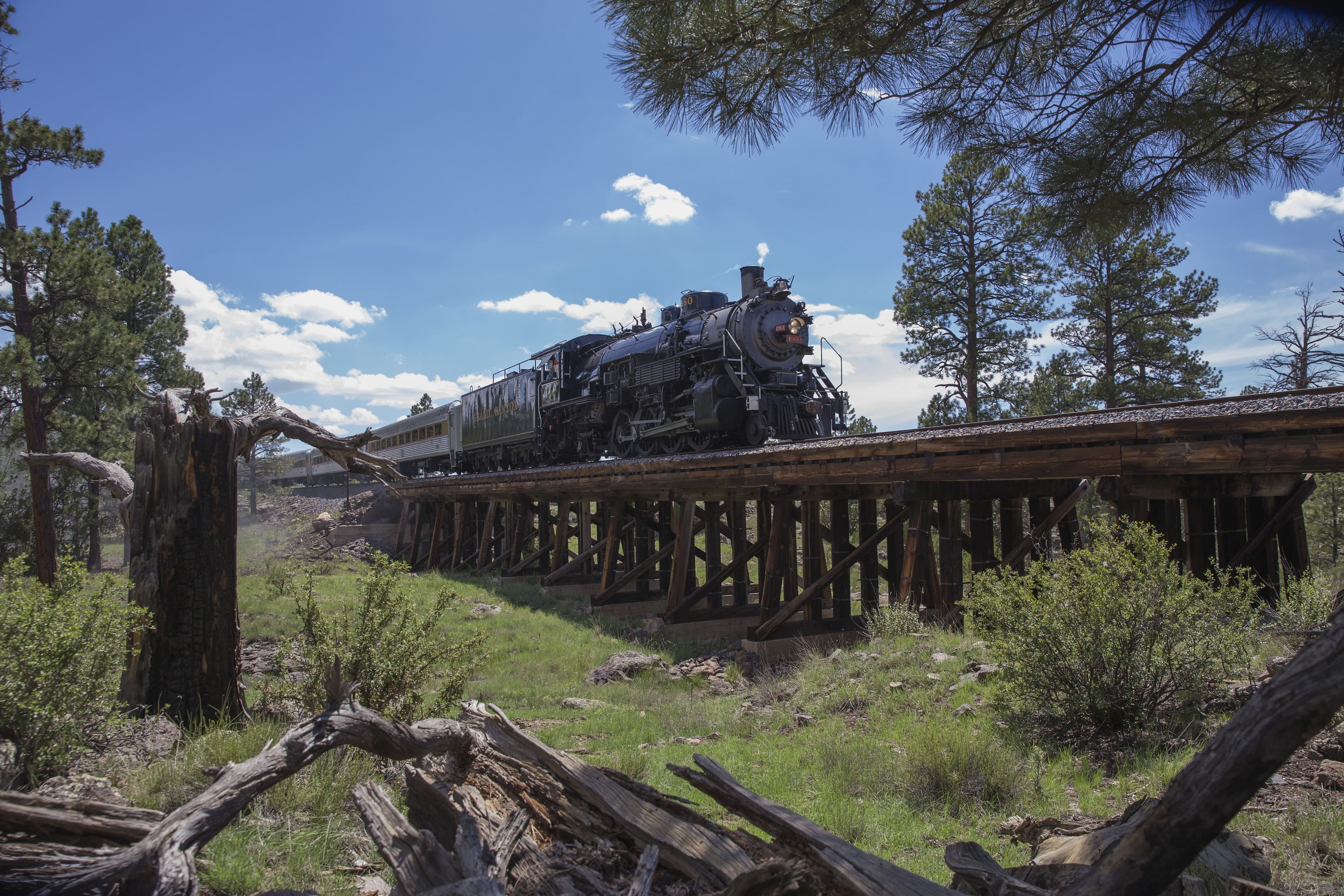
It’s a milestone year, as the United States, Grand Canyon Railway, and Route 66 all celebrate significant anniversaries
A steam locomotive chugs its way across the high desert plateau, carrying passengers in well-appointed railcars from a dusty western outpost to the South Rim of the Grand Canyon, a wonder of the natural world. A moustached cowboy strolls the aisle strumming western melodies on his guitar. Suddenly, masked bandits emerge from the scrub on horseback, descending on the train with guns brandished attempting to catch and climb aboard in a classic train robbery.
Of course, the guns are fake and the bandits just performers, in a scene that feels like Butch Cassidy and The Sundance Kid. And it’s just part of the experience on the family-friendly Grand Canyon Railway, running every day out of Williams, Arizona.
A proud symbol of days gone by, the Grand Canyon Railway continues to delight travelers with a unique and entertaining journey between Williams and Grand Canyon Village. It’s a journey started 125 years ago and carried forth by visionary entrepreneurs who recognize its special place in western history.
Laying the Tracks
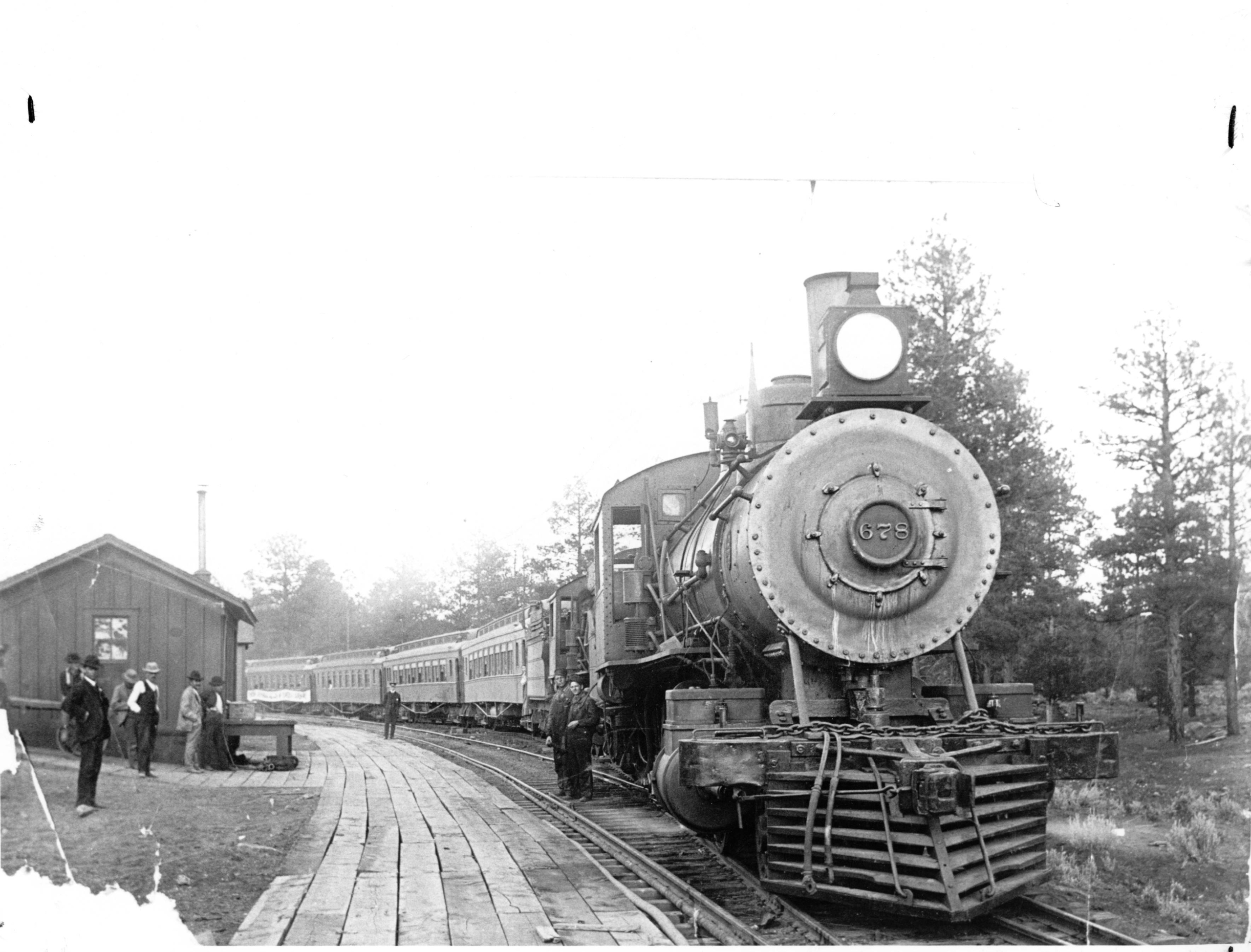
In the late 19th century, the Atchison, Topeka and Santa Fe Railway was one of the only continuous train routes between Chicago and Los Angeles. Passing through Williams, the tracks connected there to a rail line used to transport ore from mines further north. Local prospector and one-time county sheriff Buckey O’Neill realized that this ore train would be more lucrative if it could haul tourists the full 65 miles to the edge of the Grand Canyon, instead.
Unfortunately, O’Neill was killed serving with the Rough Riders in the Spanish-American War before he could see his idea become reality. But the AT&SF Railway saw his vision through and completed the final stretch of track carrying passengers to the South Rim in 1901. This new rail line would cost tourists $3.95, a significant improvement from the alternative $15 and eight-hour stagecoach ride over rough land.
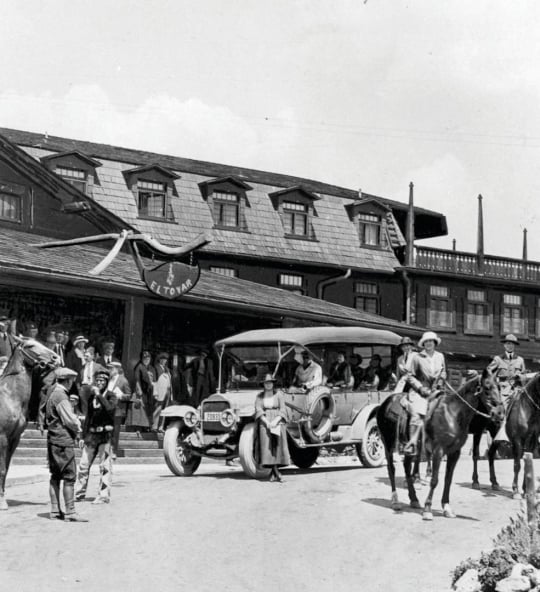
Following the completion of the Grand Canyon Railway, a series of developments popularized the train journey, making it an attractive and comfortable trip for the leisure class. Inspired by tourism and hospitality visionary Fred Harvey, the El Tovar Hotel rose from the South Rim in 1905. The Fray Marcos Hotel opened in the Williams Train Depot in 1908. And a proper train depot at the Grand Canyon terminus was opened in 1910. In 1919, the Grand Canyon was established as a national park. Now with luxurious amenities at both ends, the rail journey and Grand Canyon tourism would run full steam ahead for the next several decades.
Meanwhile, more and more roads were being constructed as automobile travel became commonplace across the United States. Officially established in 1926, at a whopping 2,448 miles long, the infamous Route 66 would become the first entirely paved road and the main route for visitors traveling west to California. Dubbed The Mother Road by John Steinbeck in his novel The Grapes of Wrath, Route 66 was the primary road for migrants in the 1930s, escaping the Dust Bowl and hoping for a fresh start in California.
Parallelling the AT&SF Railway from Chicago to Santa Monica, the “Main Street of America” would subsequently become an icon of the increasingly popular American road trip. Celebrated in movies and songs across pop culture, and challenging the railroads as a primary form of travel, Route 66 cemented itself as the emblem of a new age of travel in America.

Running Out of Steam
As technology evolved in the 20th century, the steam locomotive was eventually replaced by more efficient and affordable diesel engines across the entire industry. The Grand Canyon Railway was no exception, with its last steam engine making the journey in 1953, and its entire fleet being replaced by diesel trains. But it wasn’t the engine that eventually doomed the Grand Canyon Railway.
Due to the increase in, and convenience of, automobile travel, ridership gradually declined and the Grand Canyon Railway was forced to stop service in 1968. The Grand Canyon Depot closed one year later. And the train, once a source of regional pride and a symbol of Americans’ pioneering spirit, was replaced by interstate highways lined with billboards and gas stations.
As the interstate system continued to grow, it would also relegate another American icon to the annals of history. Route 66 was gradually bypassed by larger and faster highways with its final stretch through Williams being replaced by I-40 in 1985. The Main Street of America became a nostalgic roadway that is today a tourist attraction in its own right, dotted with vintage diners, motels, and kitschy souvenir shops. As an iconic piece of American history, it’s only fitting that Route 66 now celebrates its 100th anniversary in lock step with the 250th anniversary of the United States and the signing of the Declaration of Independence.
By the late 1980s, plans were underway to salvage the old railway for parts. It hadn’t been maintained for decades, thieves had stolen about 30,000 rail ties, road beds needed refilling, and trees blocked the line. The once elegant Fray Marcos Hotel had been vandalized and thoroughly damaged by weather and age. The railway was finished.
Until, that is, businessman Max Biegert and his wife Thelma came to the rescue. Investing $15 million in the complete restoration of the railway, the Williams Depot, and the hotel, the Biegerts saved this slice of American history and brought the railway back to life. They reconditioned two historical steam locomotives. And in just a few short years, by 1993, the Grand Canyon Railway would bring 105,000 passengers to the South Rim, significantly reducing car traffic in the park and resurrecting this classic rail journey.

New Horizons
The story takes another turn when, in 2007, the Biegerts sold the railway and assets to Xanterra Travel Collection®, securing its operations for the foreseeable future. Under this new ownership, the Grand Canyon Railway underwent a series of innovative transformations to align with Xanterra’s commitment to sustainability.
In 2009, a couple years after reinstating limited steam operations, the railway converted old engine No. 4960 from steam power to run purely on waste vegetable oil as the new “Cataract Creek Rambler.” And in 2024, plans were made to convert one of the diesel locomotives to a battery-powered electric engine, further reducing the environmental impact.
Passenger cars were restored to their former glory, with vintage luxury parlors and glass domes added to provide undisturbed views of the desert landscape. Cowboy characters and western musicians were added to entertain guests along the way. In Williams, an Old West shootout is reenacted in the streets before the train leaves the station. And the historic Route 66 lives on with tourist attractions and tributes to the infamous byway.
And so, the Grand Canyon Railway journeys on, running daily round trips between the Williams and Grand Canyon depots. It’s a beloved, living museum on tracks, blending history and innovation between the nostalgia of old Route 66 and the magnificence of the Grand Canyon.
Happy Anniversary!
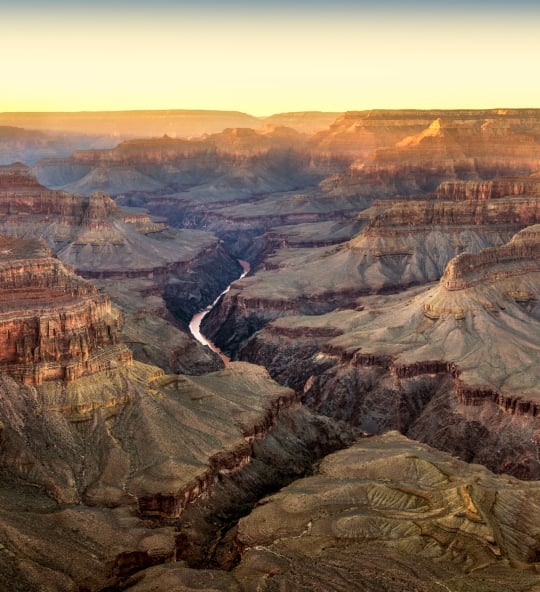
250 Years
1776: United States signs the Declaration of Independence on July 4.
150 Years
1876: Tourism and hospitality visionary Fred Harvey founded The Fred Harvey Company, known today as Xanterra Travel Collection®
125 Years
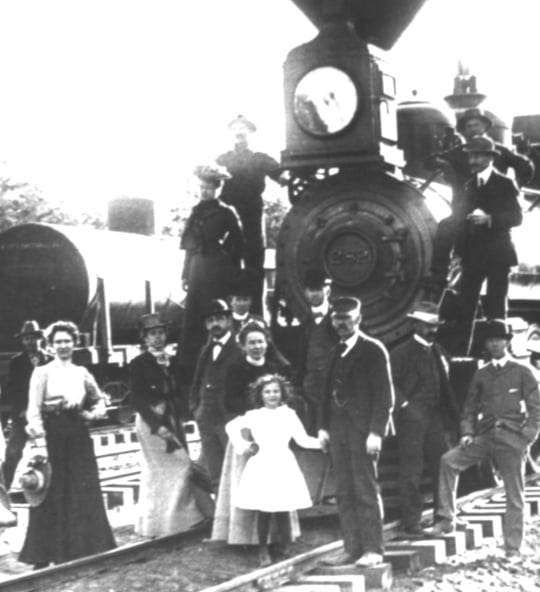
1901: Grand Canyon Railway completes the first trip between Williams and the South Rim on September 17.
100 Years
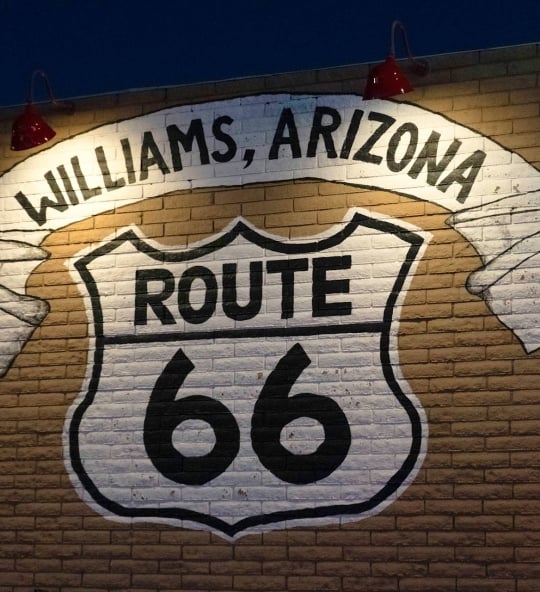
1926: The Main Street of America, Route 66 is officially established on April 30.
-
250 Years
-
150 Years
-
125 Years
-
100 Years