

-

Water in the Desert
How The Oasis at Death Valley Reuses One of Its Most Precious Resources
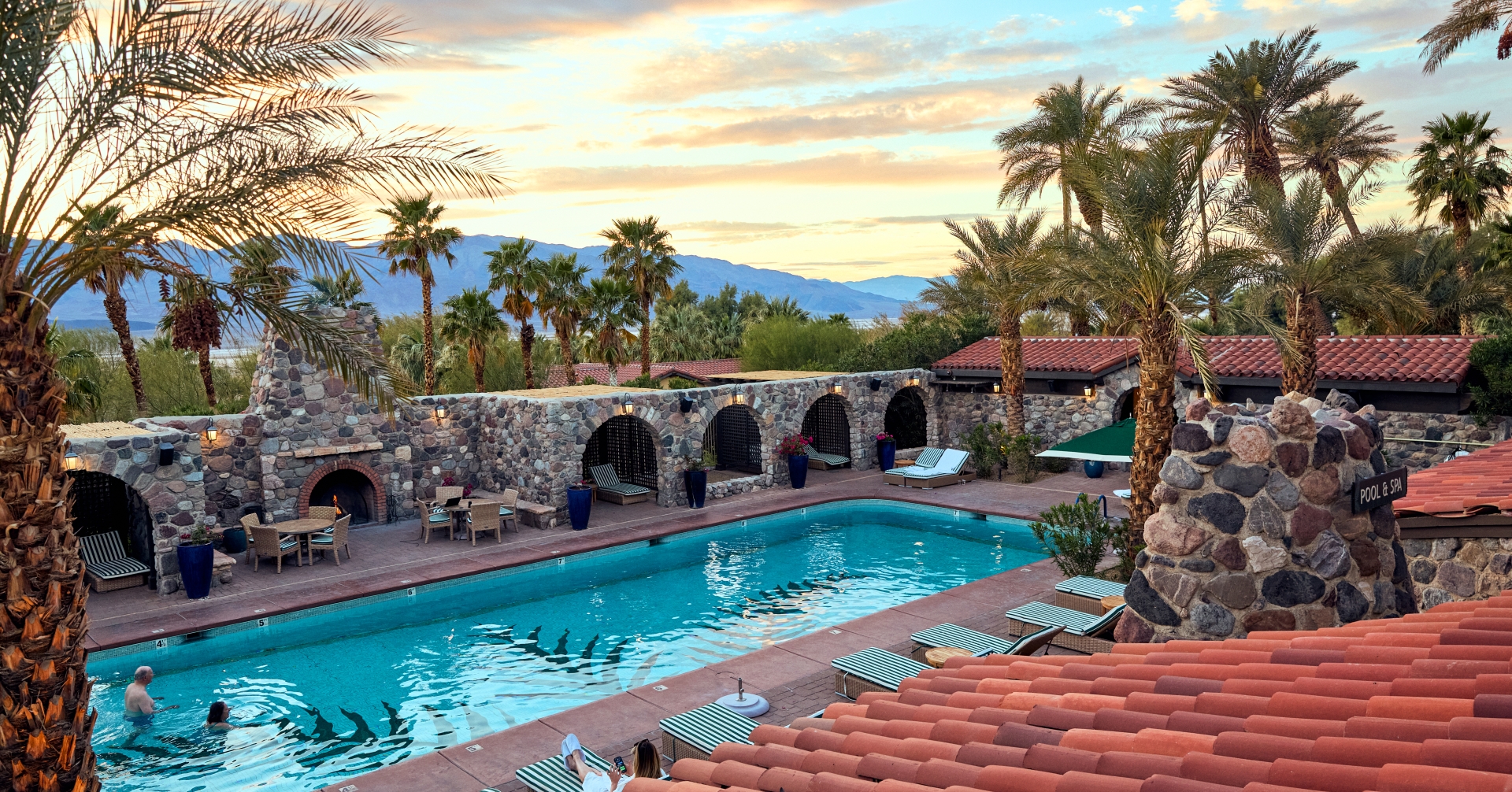
In a place where rainfall averages less than two inches per year, water is a treasure beyond measure. Yet, at The Oasis at Death Valley, this precious resource is managed so thoughtfully that guests can enjoy spring-fed pools, palm-lined gardens, and even an 18-hole golf course — all while respecting the delicate balance of the desert’s natural systems.
Nestled within Death Valley National Park, The Oasis at Death Valley is located in the driest place in North America. In fact, there were two years—1929 and 1953—when not a single drop of rain fell in the valley. Despite this, visitors are often astonished to find flowing water, lush greenery, and refreshing pools. So, how does this desert marvel sustain such an abundance of life?

A Natural Oasis in the Heart of Death Valley
Death Valley is a true American oasis, a rare phenomenon where freshwater springs bring life to an otherwise arid landscape. The original name of the resort, Furnace Creek, pays homage to the natural springs that emerge in the valley. Primarily fed by the Texas Springs aquifer, these springs have supported life in the area for centuries, making The Oasis at Death Valley one of the few natural oases in North America.
The water that sustains this desert haven begins its journey high in the mountains of Nevada. Snowmelt trickles into streams and creeks, eventually seeping underground. Over thousands of years, this water travels through layers of rock and sediment, finally reaching subterranean aquifers beneath Death Valley. The Texas Springs aquifer, part of the larger Amargosa groundwater system, sits hundreds of feet above the valley floor and feeds the springs that define The Oasis. The resort carefully draws water as it runs through the property from this fragile ecosystem, which would otherwise go unused — approximately 400 million gallons each year.

A Rare Partnership in Water Stewardship
As a privately owned property within a national park, The Oasis at Death Valley holds some of the valley’s oldest water rights, dating back to the late 1800s. Today, the resort partners with the National Park Service to manage its water resources responsibly. For example, the park service operates a reverse osmosis facility that purifies the resort’s drinking water, while the resort itself employs methods to maximize sustainability, including micro emiters and drip irrigation.
Spring-Fed Pools: Naturally Heated and Self-Refreshing
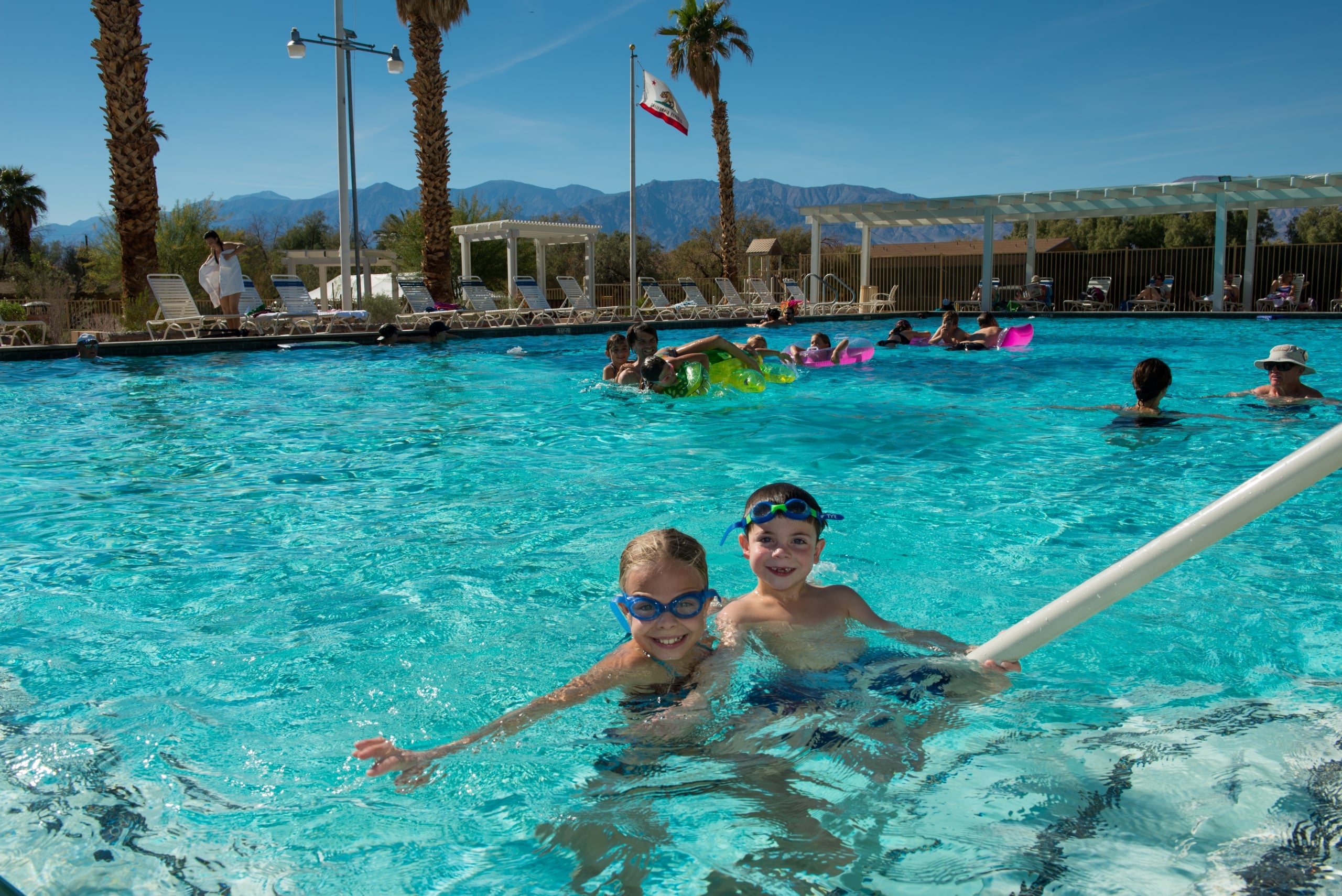
One of the most iconic features of The Oasis is its spring-fed pools. Unlike traditional pools that rely on heavily treated and recirculated water, these pools are continuously replenished with fresh spring water. The mineral-rich groundwater maintains a natural temperature of around 85°F year-round, requiring no artificial heating or cooling.
This natural flow-through system ensures that the pools completely refresh themselves approximately four times per day, or every six to eight hours. The result? Crystal-clear, mineral-rich water that’s always clean and inviting.

From Pool to Palm Trees: Maximum Reuse
What happens to the water after it leaves the pools is where The Oasis truly shines in sustainability. Instead of discarding the outflow, the resort channels it into a series of holding ponds. From there, irrigation pumps redistribute the water to nourish the resort’s golf course, gardens, palm trees, and landscaping.
Here’s how it works:
- Fresh spring water fills the pools.
- Water flows out naturally throughout the day.
- It collects in holding ponds.
- Pumps reuse the water for irrigation.
This innovative approach allows the resort to recycle nearly all of its pool water for landscaping — a rare practice in the hospitality industry.
Working With Nature, Not Against It
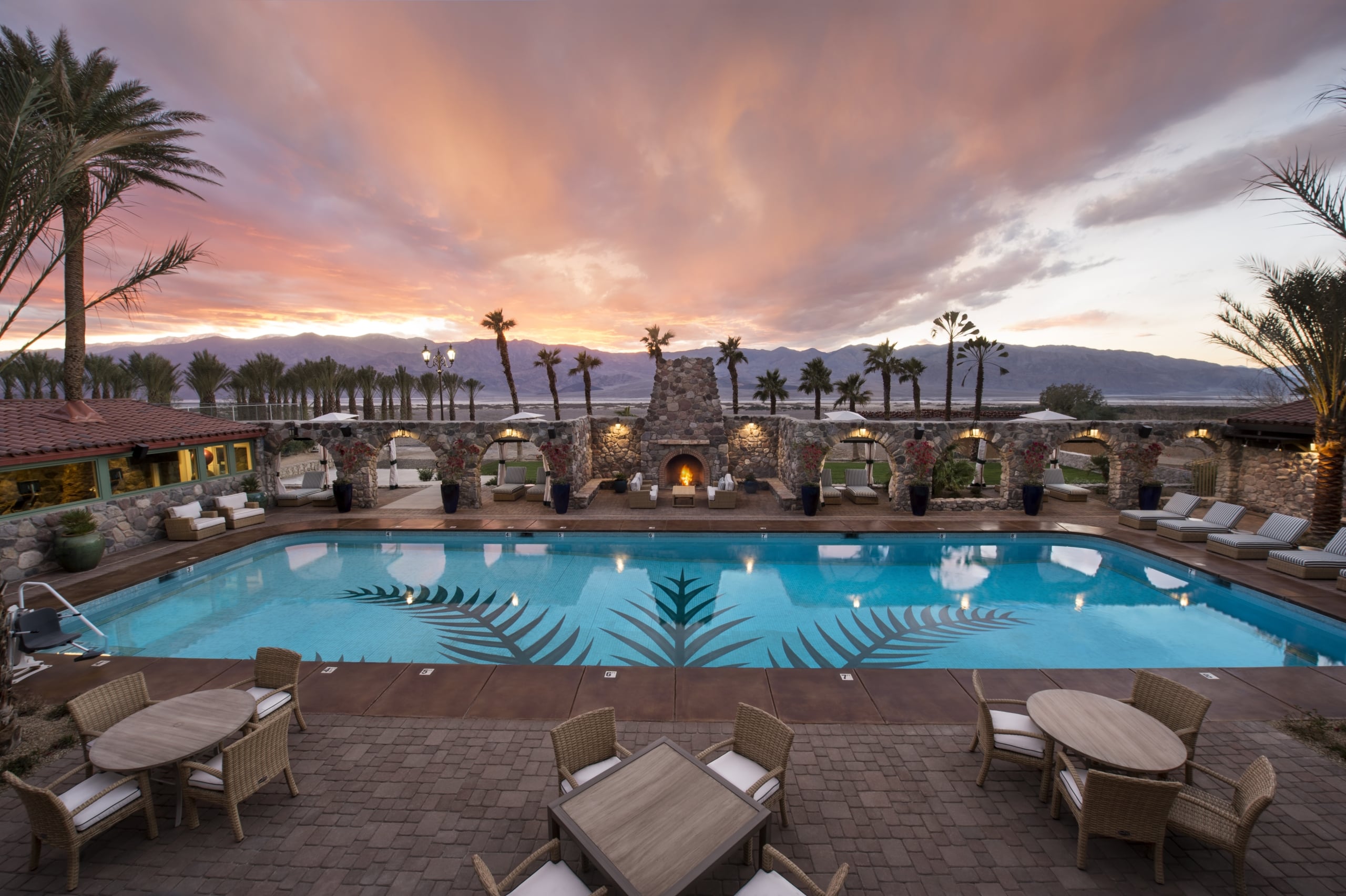
The resort’s water management system does more than reuse this precious resource — it works in harmony with the desert’s natural processes. Without human intervention, much of the spring water would naturally flow across the valley floor, eventually evaporating and leaving behind mineral salts. By thoughtfully managing the water, Xanterra helps keep the golf course ponds full year-round, supporting many migratory bird species and contributing to the property’s certification as an Audubon Cooperative Sanctuary.
Rather than interrupting the water’s natural journey, The Oasis simply extends it. Water diverted for recreation and irrigation is ultimately returned to the ground, where it would have naturally ended up over time. The same principle applies to the resort’s drinking water system. Once treated, natural spring water used for cooking, showers, and other indoor purposes then released back into the environment, continuing the cycle.
In essence, the resort borrows water from the desert’s natural flow and gives it back, ensuring that the ecosystem remains intact.

Stewardship in an Extreme Environment
Death Valley is a land of extremes, from its scorching summer temperatures to its towering mountain ranges. In such a harsh environment, every drop of water is invaluable. At The Oasis at Death Valley, thoughtful engineering and responsible stewardship ensure that guests can enjoy lush gardens, refreshing pools, and historic hospitality—all while honoring the fragile desert ecosystem. This remarkable partnership between nature and innovation serves as a powerful reminder: even in the driest places on Earth, sustainability can thrive when we work with nature rather than against it.
For more information about The Oasis at Death Valley, visit OasisAtDeathValley.com